When we first moved to La Boutonnière, I had just discovered permaculture. I was fully signed up to the concepts of no chemicals, taking care of the soil, and using nature to help achieve my goal of growing our own food. And whilst I still firmly believe in the ethos and ethics of permaculture, I have come to realise that I need to adapt some of the rules in order to get the most out of my potager.
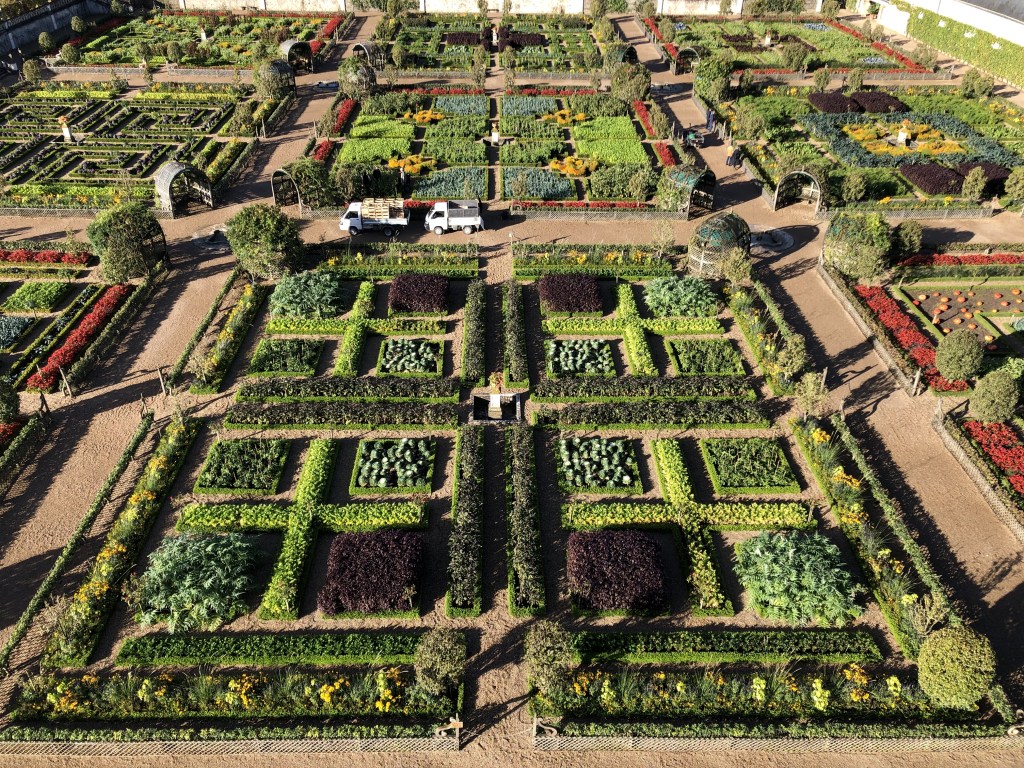
What I get out of that particular patch of the garden is more than just fruit or vegetables. It is a place of solace, a place in which I nurture new life, and slowly watch it grow and develop into something that nourishes me further, when I eat it. But a large part of the inner peace that I get when I am in the potager, comes from the regularity and the structure. I love the look of the potager in winter when most of the beds are empty and I have clean dark zones of compost contrasting against the green grass and pale pathways. Plants are, by their very nature, chaotic. But that chaos can be ordered in a manner that is more pleasing to me.
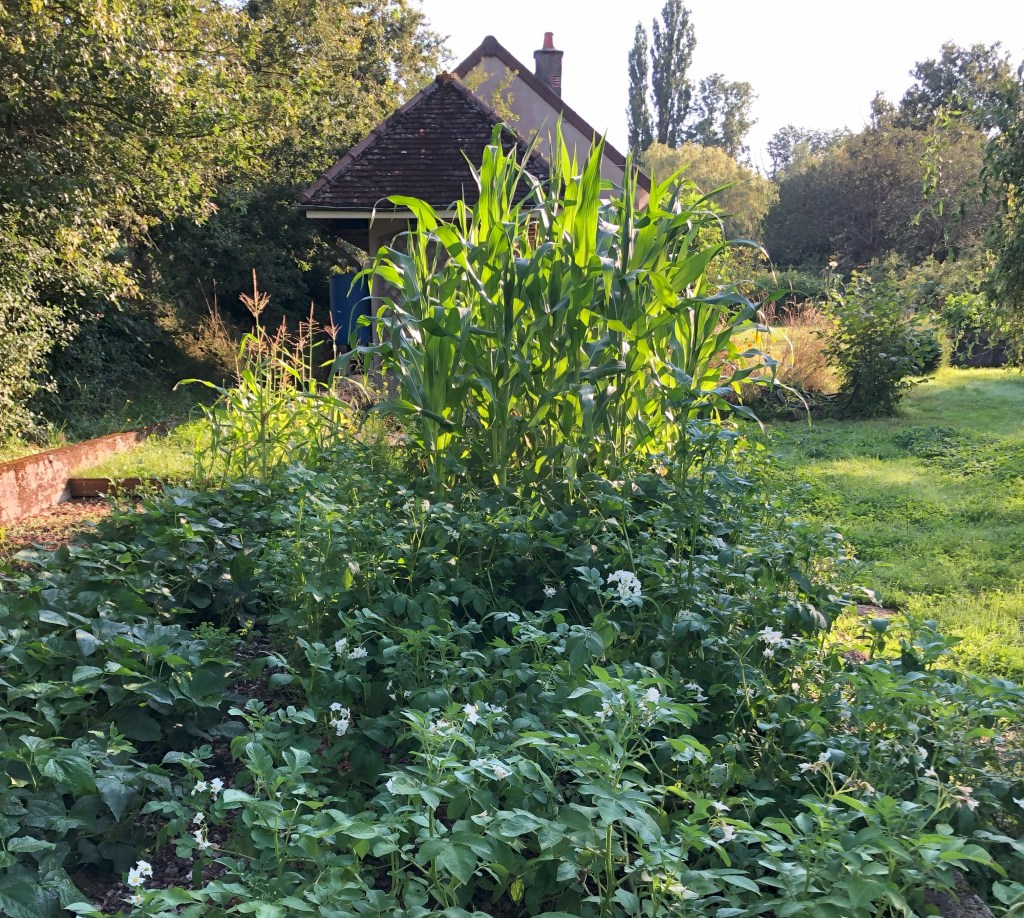
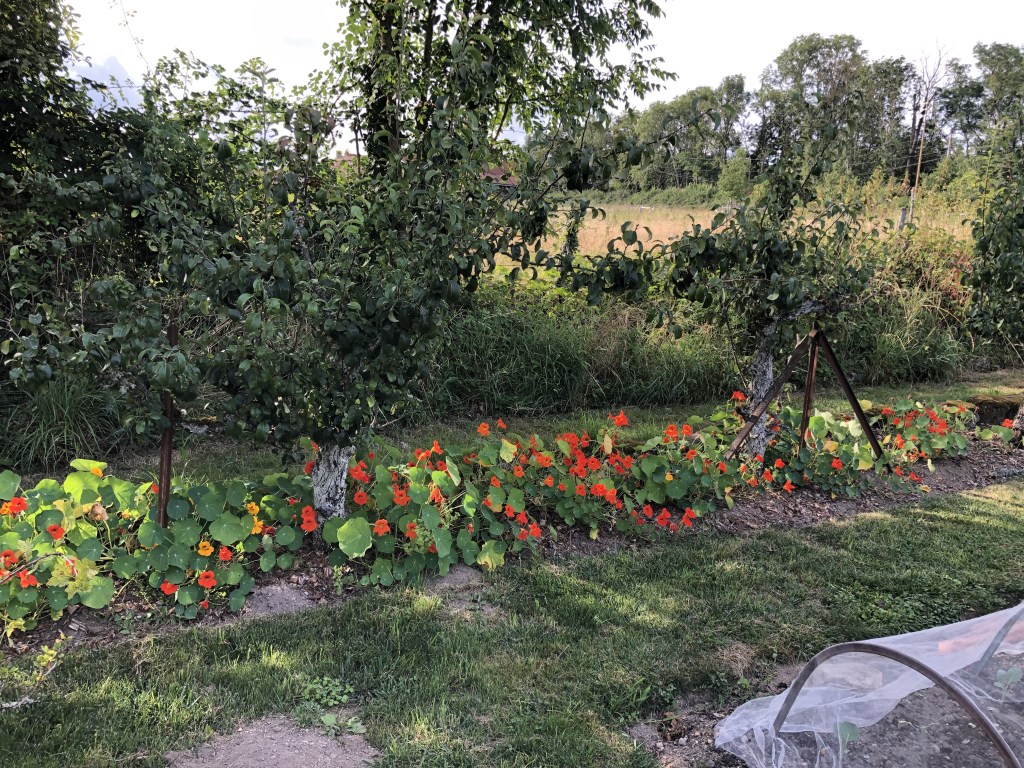
One of the tenets of permaculture is mixed planting, growing different species together in order to aid each other. This can be done with simultaneous planting (growing marigolds beside tomato plants is a well-known example), or successive planting (placing new seedlings in spaces where harvesting has created gaps). Both of these concepts make a lot of sense, but they look random and disorderly if done in a true permaculture manner. This year I decided to grow dwarf beans in between my sweetcorn. This has many theoretical benefits, the beans put nitrogen back into the soil which the sweetcorn depletes and they also help suppress weeds which otherwise would grow between the corn. This all happened, but many disadvantages also happened. Bindweed still managed to grow, and because I could no longer see the young shoots, it became well established growing up the corn. The beans grew very well and became a messy, dense, cluster of pods that were hard to access and, ultimately, most of them did not get picked. The mass of greenery overflowed the edges of the bed, ruining my straight lines and making it hard to mow the grass without mowing beans as well. All in all I got very little pleasure and few beans out of that bed. Even the sweetcorn did not thrive (although I think that was down to a lack of sun reaching that particular bed). So I now know not to repeat that style of companion planting. I still like the idea of growing something at the base of my sweetcorn, but I think next year I will plant nasturtiums, they can scramble around (and up) the sweetcorn providing ground cover and colour, but I can also happily cut back the edges without any concern, and harvest leaves if I want, without needing to get them all. In many ways it doesn’t sound much different to the beans, but I think the abundant, vibrant colour from the flowers will be a stark contrast to the corn.
I am also not very good at planting young plants in between established or mature plants. I don’t like the confusion of species. I enjoy knowing that a certain area is all one thing, and it can all be treated in a similar way. I don’t have to juggle the needs of the broccoli with those of the carrots. I appreciate that nature happily grows it all together, I see this every time I spread my home made compost in the spring, I get a melange of tomato, squash, potato, and the odd carrot all happily growing together without any input from me!
I am constantly trying to make a perfectly chaotic system into an ordered and binary one. This is destined to fail, however, on the few occasions when it works, the results are glorious.
 La Boutonniere